

A good wedding rain plan is a decision you make early, not a forecast you hope for. Pick a backup (a tent, an indoor room or both), name one person who makes the call, set a time by which the call must be made, and prepare the messages and logistics before anyone is worried. The same plan works for a backyard party or any other outdoor event, only scaled down.
We are Party Perfect America, an event rental business based in North Brunswick, NJ. Below is a practical way to build a rain plan for events in New Jersey, New York and Connecticut, including what a tent does and does not protect against.
TL;DR
- Choose your backup first: a rented tent on site, an indoor space at the venue, or a combination, and put the decision in writing.
- Assign one decision-maker and an alternate, and agree on checkpoints (a few days out, the day before, the morning of) rather than a single rain percentage.
- A tent keeps rain off the area it covers. It does not stop standing water, runoff or lightning, and it is not a lightning shelter.
- Plan the ground: flooring or walkways for the aisle, entrances and restroom paths, plus a dry route for caterers and vendors.
- Write guest and vendor messages ahead of time, and request a tailored quote early, because delivery and availability are confirmed per booking.
Table of Contents
- Start with the backup, not the forecast
- Who decides, and when
- What a tent does and does not do
- Lightning is a different problem from rain
- Keep guests comfortable and protect what you rented
- Tell everyone what is changing
- Planning a rain plan for a backyard party
- Tents, tables and chairs for your rain plan
- Questions to ask your venue and rental company
- A simple rain plan template
- FAQ
- Sources
Start with the backup, not the forecast
Most couples check the weather app first and decide what to do second. Reverse that. Professional guidance on backup plans says a well-rounded one covers an alternate ceremony or reception location, tenting logistics if needed, layout changes, lighting, vendor re-coordination and a revised timeline, as outlined in Brides’ guide to wedding backup plans.
That list is a useful checklist because each item is a separate piece of work:
- Location: Where does everyone go if the lawn is unusable? A banquet room, a barn, a covered porch, or a tent over the same footprint.
- Layout: Tables, dance floor, bar and buffet may not fit the same way under cover. Sketch the backup layout now.
- Lighting and power: Tents and indoor rooms are darker than a sunny lawn. Think about where lights and cords go.
- Vendors: Your DJ, caterer, photographer and florist each need to know the backup, the cutoff time and the new load-in route.
- Timeline: Rain often means a slower setup and a slower walk from ceremony to reception. Build a few extra minutes into the schedule.
Choose the type of backup that fits your site
There are three common approaches, and each suits a different setting.
| Backup type | Works well when | Think about |
|---|---|---|
| Rented tent over the planned space | Backyard weddings, open lawns, venues that allow tents | Flooring, drainage, anchoring, access routes, lighting |
| Indoor room at the venue | Venues with a ballroom, barn or hall | Capacity for ceremony plus reception, switching time, signage |
| Hybrid (tent for reception, indoor space for ceremony or severe weather) | Larger guest lists, longer events | Two layouts, two vendor briefings |
If you are still working out which tent size and layout suits your guest count, our guides on tent sizing and layouts in NJ and wedding tent layout ideas show how tables, a dance floor and a bar can fit under cover.
Who decides, and when
A rain plan fails most often at the decision, not at the equipment. Everyone assumes someone else will make the call. Fix that with two rules.
One decision-maker, one alternate. This is usually the planner, the venue manager or a lead the couple trusts. Name a second person who can act if the first cannot be reached. Do not make the bride or groom the person who decides on the wedding morning.
Checkpoints instead of a magic percentage. There is no universal rain chance that means “move indoors.” Look instead at when the rain is expected, how wet the ground already is, how long a switch takes, and how your guests will get around. Many planners use checkpoints like these:
| Checkpoint | What to do |
|---|---|
| About 3 days out | Start watching the forecast trend. Confirm your backup is still available and that vendors are on standby. |
| 1 to 2 days out | Make the larger calls: add a tent, confirm the indoor option, order flooring. Rental deliveries need lead time, so this is the latest sensible point for them. |
| Day before | Stage backup furniture, signage and umbrellas. Send a “heads up” message if rain is likely. |
| Morning of | Make the final call on smaller changes such as heaters, shade, or moving the ceremony. Check radar for timing. |
| 1 to 2 hours before guests arrive | Last check. Confirm the plan with the venue and vendors. |
These timings are a planning framework, not a rule. The right schedule depends on your venue’s setup time, your rental delivery window and how quickly the room or tent can be reset. Ask your venue and your rental provider how much time they need.
What a tent does and does not do
A tent is the most common rain solution for backyard and lawn weddings, and it is a good one. It is worth being exact about what it covers.
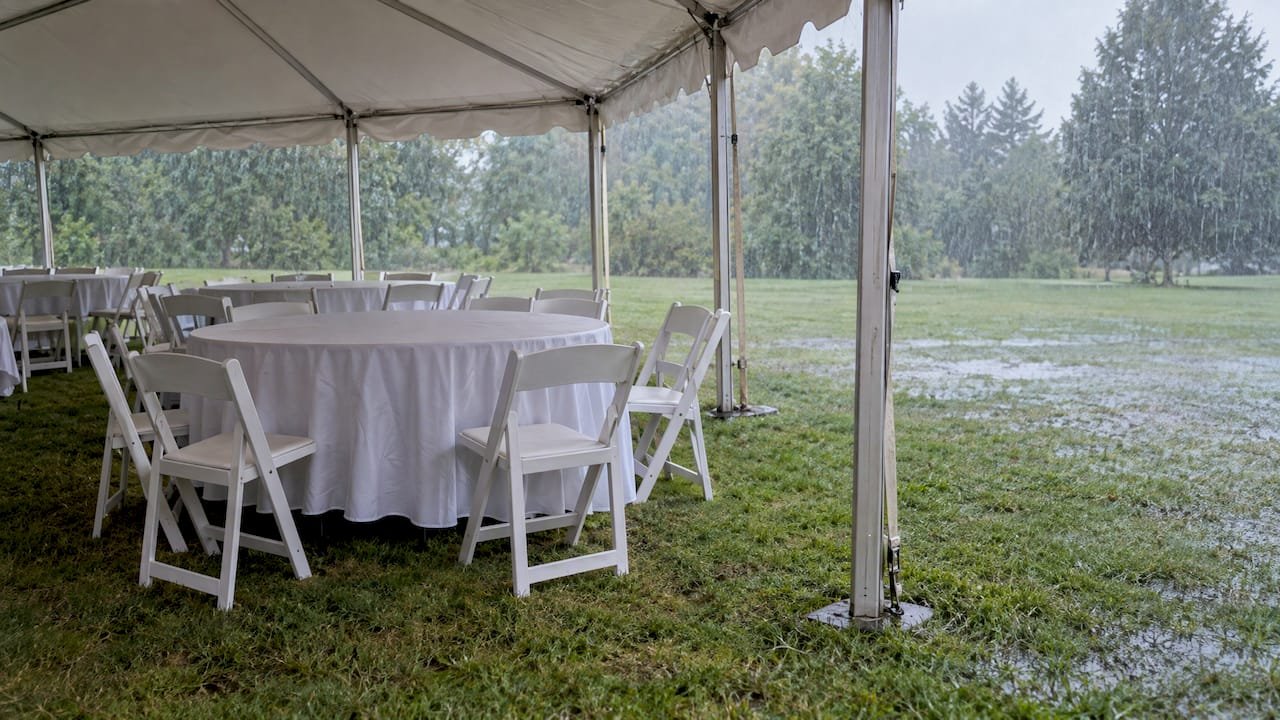
A tent covers rain that falls on its footprint. It does not remove standing water under it, runoff flowing across the lawn, or the soggy path from the driveway to the entrance. It also does not make the area safe in lightning.
That means a tent decision should come with a short checklist:
- Slope and drainage. Walk the site after a heavy rain if you can. Low spots collect water. Avoid placing tables where water runs.
- Flooring or matting. Rent flooring or walkways for high-traffic areas like the ceremony aisle, the reception entrance and routes to restrooms. A drying zone near the entrance with a mat, umbrella storage and towels helps too, as suggested in this wedding rain plan guide.
- Sidewalls. Open sides let wind-driven rain blow in. Sidewalls can also help with wind and temperature. Our tent sidewall rental guide explains when they make sense.
- Anchoring. Tents on grass are typically staked, and on hard surfaces they use weights or ballast. Ask your rental company how the tent will be secured at your specific site.
- Lighting and power. Rain makes afternoon events darker. Keep cords and connections off wet ground.
- Access routes. Think about where caterers carry food, where the band loads in, and how guests with mobility needs reach the tent without crossing mud.
For more on the equipment side, see our planning guide for tent, table and chair rentals and the 20×20 tent rental guide for NJ, NY and CT events. Tent size, style and what is included should be confirmed on the current product pages and in your quote.
Wind needs its own threshold
There is no single wind speed that is right for every tent. The safe limit depends on the structure’s design, its manufacturer’s rating, how it is anchored or ballasted, and site conditions. Ask your rental provider for the limit that applies to your specific tent and agree in advance on who decides to clear it. If gusts approach that limit, guests should leave the tent before conditions exceed it, not after.
Lightning is a different problem from rain
Light rain is an inconvenience. Lightning is a safety event, and the rain plan should treat it separately.
The National Weather Service states that tents and picnic shelters do not protect you from lightning. Use a fully enclosed building or, if none is close, a hard-topped vehicle, according to this NWS lightning shelter guidance. So your plan needs a real building, identified in advance, with a known walking time from the event area.
A workable lightning rule looks like this:
- Name the enclosed shelter before the event and tell your vendors where it is.
- Assign someone to watch forecasts and radar through the day.
- When lightning is seen or thunder is heard, stop outdoor activity and direct everyone to shelter.
- Do not resume until about 30 minutes after the last thunder. Any new thunder restarts the clock.
That is the same approach used in the NWS hazardous weather action plan template, which also suggests naming who has authority to postpone, delay or cancel. The CDC’s lightning recommendations for organized outdoor events make the same points about a monitor, a safe shelter identified ahead of time and an all-clear about 30 minutes after the last thunder. They were written for sporting events, but the principles apply to any gathering.
The National Weather Service’s EventReady guidance adds a point about timing: watches should prompt you to begin monitoring radar and reviewing the plan, and warnings often do not give enough lead time to start moving people. Read more in the EventReady thunderstorm guidance. In practice, that means acting on a watch, not waiting for a warning.
If your wedding is a destination event or falls in tropical storm season, the same thinking scales up to the whole trip. This guide to planning around hurricane season walks through how to keep travel plans flexible when storms threaten.
This section is general safety guidance. It is not specific to any equipment we rent, and your venue may have its own weather policy that you should ask to see.
Keep guests comfortable and protect what you rented
A wet wedding can still feel good if guests are warm, dry and informed. Small items do much of the work.
Guest comfort kit
- Umbrellas at the parking area, the ceremony entrance and the path to the restrooms
- A mat, towels and an umbrella stand at the main entrance
- Wraps, blankets or hand warmers for fall and spring events
- Heaters in a tent, provided your rental company and venue approve them and they are placed safely
- Clear signs for any changed route
Food, equipment and decor
Cover food stations and protect equipment from water. Plan a dry route for the caterer, and keep power cords away from wet ground and puddles. Ask your caterer and DJ to confirm where they will set up if the plan changes.
Decor needs the same thought. Paper signs, fabric backdrops and floral installations can get damaged by wind-blown rain. If you plan to rent items such as marquee letters, flower walls and backdrops, ask in advance which placements work under cover and which should stay indoors. The same goes for a photo booth or audio guest book, which should sit in a dry area with safe power, away from the entrance where umbrellas drip.
Tell everyone what is changing
A backup plan only works if people know about it. Prepare these messages before you need them:
- Guests: The updated location, arrival instructions, parking information and timing. Send by text or email, and update your wedding website.
- Vendors and staff: The new load-in route, setup time, power location and cutoff time.
- Onsite signs: Arrows and short notices from the parking area to the entrance, especially if the ceremony location moves.
- Venue: Confirmation of the plan and any rules for tents, heaters, or cords.
A severe-weather plan should also define how the team will communicate changes to guests, staff and vendors, which is why it helps to have one person owning the message. Draft two versions: a “plan B is on” message and a “plan A is still on, but bring layers” message. Pick the one to send, change the time and you are done.
Planning a rain plan for a backyard party
A backyard party faces the same weather but has fewer vendors and less formality, so the plan can be simpler.
- Decide the covered space. A tent over the main eating and seating area is the core of most backyard rain plans. Our tent, table and chair packages for NJ backyard parties show what a seating and cover setup can look like. Confirm the current contents and details on the product page.
- Check the yard. Look at drainage, trees, overhead wires, gates and the path from the street. A tent needs a clear, reasonably level area.
- Plan an indoor fallback for the kids. If you rented a bounce house or soft play, ask the rental company what weather conditions mean it should not be used and who decides. Do not guess. Wet, windy or stormy conditions are exactly when these questions matter, and the answer is specific to the equipment.
- Choose a decision time. Agree with your co-host on when you will decide, usually the evening before and again in the morning.
- Have a rain date if possible. Some hosts can pick a backup date. If so, tell guests when you send invitations.
For larger parties, a multi-tent setup may suit better. See the Three Tent Event Package for one configuration, and ask us whether it fits your guest count and yard.
Tents, tables and chairs for your rain plan
If your rain plan includes a tent, we can help you plan it. Party Perfect America rents tents, tables and chairs for events in New Jersey, New York and Connecticut, and our wedding and backyard packages can be customized around your guest count and layout. Available packages include the Wedding Glam Package and the Backyard Bash Package.

Delivery is subject to availability and a location-specific quote. Availability, setup details, pricing and inclusions are confirmed for each booking, so the earlier you ask, the more options you will have. Request a tailored quote with your event date, address and guest count, and tell us it is for a rain plan so we can help you think through the layout.
Questions to ask your venue and rental company
Bring this list to your next call:
- Does the venue allow tents, stakes, heaters and extra power? Do any permits apply in your town?
- Where can a tent go, and what is the ground like?
- What is the latest day and time you can add a tent or change the setup?
- How is the tent anchored on grass or a hard surface?
- What wind speed or weather conditions mean the tent should be cleared?
- Where is the nearest enclosed shelter for lightning, and how long does it take to walk there?
- Can flooring or walkways be added to high-traffic areas?
- What happens to the rental if the event is postponed? Refund and rescheduling terms should be confirmed in writing with your provider, since they vary by company.
A simple rain plan template
Copy this into a note and fill it in.
- Event: date, address, guest count
- Plan A: outdoor ceremony and reception
- Plan B: tent over reception, ceremony under tent or inside
- Plan C (severe weather): enclosed building: name it
- Decision-maker: name and phone; alternate: name and phone
- Checkpoints: 3 days out, day before, morning of, 2 hours before
- Final cutoff time: when the last change can happen
- Vendors to call: caterer, DJ, photographer, florist, rental company, venue
- Guest messages: drafted and saved in your phone
- Comfort kit: umbrellas, towels, mats, wraps
FAQ
How far ahead should I decide on a rain plan for my wedding?
Build the backup when you plan the wedding, not when rain appears in the forecast. Then use checkpoints: watch the trend a few days out, make major changes a day or two before, and make smaller calls on the morning. Confirm with your rental provider how much lead time they need for delivery.
Is a tent enough if it rains on my wedding day?
A tent covers rain on the area under it, so it is the right core of a backyard rain plan. It does not deal with standing water, runoff or lightning. Add flooring or walkways, check drainage and wind limits, and name an enclosed building for thunderstorms.
What should I do if there is lightning during an outdoor event?
Stop outdoor activity and move everyone into a fully enclosed building, because tents do not protect against lightning. Wait about 30 minutes after the last thunder before resuming, and restart the wait if you hear more. Assign one person to monitor the weather.
Can I use a bounce house or photo booth if it is raining?
That depends on the specific equipment, the weather and the setup, so ask the rental provider before the event. Confirm in advance what conditions mean it should not be used and who makes the call. Set up indoor or fully covered, dry areas with safe power for electronics.
Who should tell guests about a change of plans?
Give that job to one person, usually the planner or a trusted friend or family member, not the couple. Prepare the messages ahead of time with the new location, arrival and parking details, and timing. Send them by text or email, update your website and put signs onsite.
Sources
- How to Create a Backup Plan for Your Wedding, Brides
- Outdoor Wedding Rain Plan: Exactly What to Do If It Rains, DaisyChat
- Postpone and Shelter guidance, National Weather Service
- Hazardous Weather Action Plan template, National Weather Service
- Lightning and Organized Sporting Event Recommendations, CDC
- EventReady Appendix B: Forecasts Related to Thunderstorms, Flash Flooding and Heat, National Weather Service
- Hurricane Season Travel: How to Plan Smart and Still Go